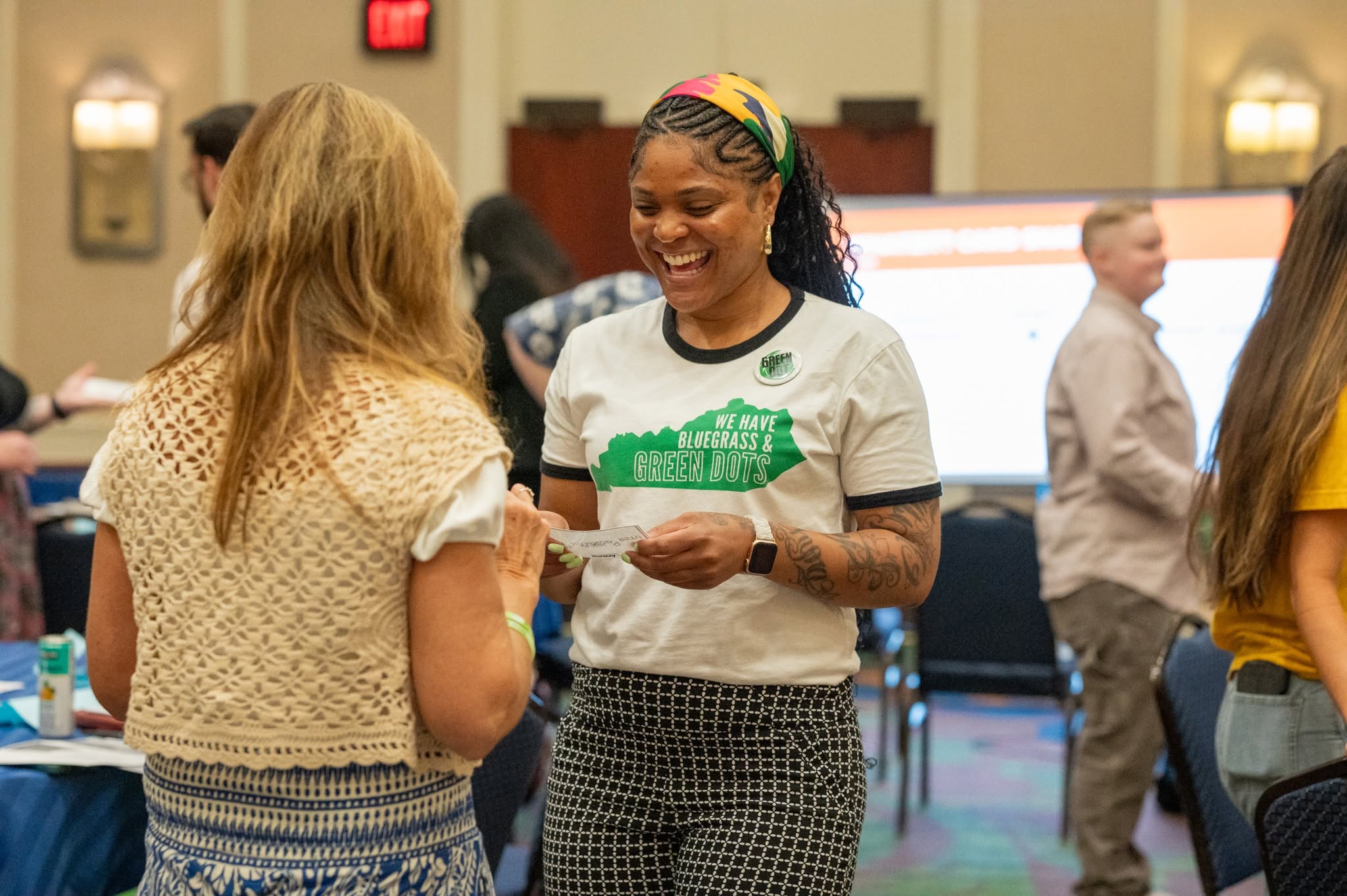
Organized by KASAP Prevention Coordinator Sarah Jump, this year’s Kentucky Prevention Summit brought together prevention educators from across Kentucky to connect, share ideas, and strengthen their shared commitment to creating safer communities for young people across the Commonwealth.
A key focus of this year’s conversations was expanding prevention programming in middle and high schools. Much of that work centered on how we build strong, respectful partnerships with teachers and administrators, communicate the value of prevention programming, and support schools in ways that fit their unique environments. Schools are balancing many priorities and requirements, and effective prevention work depends on meeting them where they are and showing up as collaborative partners.
One highlight of the summit was a mock initial school meeting demonstration led by Maura Juenger Stebbins and Louis Oelling from the Ion Center and James Stebbins, a school partner from Covington Latin School. Together, they modeled what early conversations with schools can look like when introducing prevention programming, including how to build trust, clearly communicate purpose, and navigate the questions schools often have when considering implementation.
The demonstration helped ground participants in the practical realities of partnership building. These early meetings are often where prevention work either takes root or loses momentum, making preparation and consistency especially important.
As part of the broader conversation, KASAP Communications Specialist Robyn Pizzo reflected on her experience serving on a local school board.
“I was so glad to be able to talk to our prevention educators about my experience as an elected school board member. Working through challenges that our schools are facing will help KASAP and our member centers be better partners to Kentucky’s schools and help grow our reach across the state.”
That perspective reinforced a central theme of the summit: strong prevention work depends on understanding the realities schools face and building partnerships that are responsive, respectful, and sustainable.
Throughout the summit, connection among prevention educators was just as important as the formal learning sessions. Those relationships support collaboration, resource-sharing, and stronger programming across regions.
As the summit concluded, one message stood out clearly. Prevention work is not only about curriculum or content. It is about relationships, trust, and the shared commitment to supporting young people.